/filters:format(jpeg,png)/fit-in/300x300/guide_websites/57922/images/1780545651973sea_dwellers_transparent_lockup.png)
/filters:format(jpeg,png)/fit-in/237x80/guide_websites/57922/images/1780545651973sea_dwellers_transparent_lockup.png)
Night Diving Gear: Essential Equipment for a Safe Night Dive
%2Ffit-in%2F1000x1000%2Ffilters%3Aformat(webp)%2Fguide_websites%2F57922%2Fimages%2F1778721561635snorkeling-in-key-largo.jpg&w=1920&q=75)
Published: September 9, 2026
When the sun dips below the horizon and the evening twilight settles across the open water, the ocean undergoes an extraordinary transformation. For many aquatic enthusiasts, the end of daylight signals the conclusion of their time on the water. However, for certified underwater explorers, the falling dusk represents the start of a completely different realm of exploration. Descending beneath the surface at dusk offers an intimate and serene perspective on marine ecosystems. The wide, panoramic vistas of the daytime dissolve into focused pools of light, heightening your senses and revealing nocturnal marine life that remains hidden during bright daylight hours.
Whether you are stepping into the calm Atlantic shallows or planning an excursion along offshore reefs, engaging in night diving requires thorough preparation, technical awareness, and specialised equipment. Entering the ocean without the aid of natural sunlight demands that your gear is not only reliable but tailored to the unique physical conditions of low-visibility environments. Understanding how each piece of equipment functions together ensures that you can explore the depths with complete confidence and safety. This comprehensive guide details the essential equipment required for a successful night dive, highlighting the illumination tools, navigation instruments, exposure gear, and emergency devices that every diver needs before stepping into the water after dark.
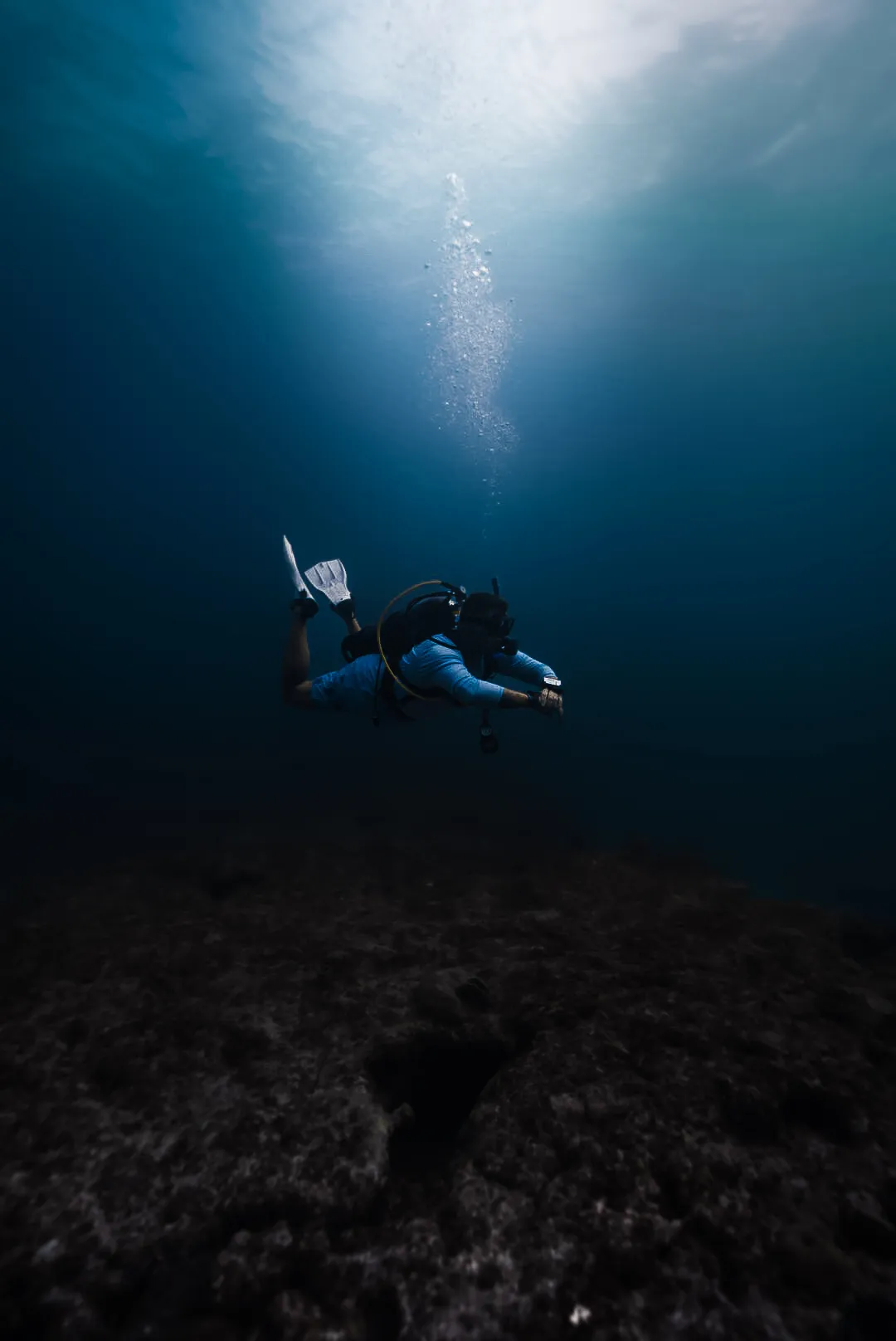
The Unique Dynamics of Entering the Water After Dark
Dipping below the surface in the evening is fundamentally different from a standard daytime excursion. The physical environment changes, communication techniques shift, and your reliance on your gear increases significantly.
The Shift from Daylight to Darkness
During the day, sunlight penetrates the water column, allowing you to identify underwater topography, judge distances, and spot buddy teams with ease. When you participate in night scuba diving, that ambient illumination disappears. Your field of view narrows to the specific cone of light cast by your handheld torch.
This narrowed focus creates a calm, almost meditative experience. Without the visual distraction of the wider ocean landscape, divers naturally slow down, hovering calmly over individual coral formations and observing subtle details that are easy to miss during the day. However, this restricted visual field also means that staying oriented and maintaining spatial awareness requires deliberate effort and reliable instruments.
Why Specialised Gear is Essential
Because natural light is absent, standard daytime diving gear must be supplemented with specialized equipment designed for low-visibility conditions. Diving in the dark introduces specific challenges, such as tracking your gauges, communicating with hand signals via light beams, and ensuring the boat crew can locate you on the surface.
Having dedicated, high-performance equipment eliminates unnecessary stress. When your torches, markers, and navigation tools are properly maintained and thoughtfully positioned on your gear configuration, you can navigate the underwater world smoothly. Every item in your night kit serves a distinct purpose, providing redundancy and safety from the moment you leave the boat platform until you climb back up the boarding ladder.
Illumination Systems: The Core of Your Night Dive Kit
Without question, illumination tools represent the most critical category of equipment for any after-dark ocean excursion. A comprehensive lighting setup includes multiple light sources, each fulfilling a specific operational role.
Primary Dive Lights: Power, Beam Angle, and Burn Time
Your primary torch is your main source of light throughout the excursion. Modern underwater lights utilize powerful LED technology that delivers bright, consistent output while consuming battery power efficiently. When selecting a primary light, there are several key factors to consider:
- Lumen Output: A primary light should produce sufficient brightness to cut through the water column, typically ranging between 800 and 2000 lumens for recreational ocean outings.
- Beam Angle: A balanced beam angle—often between 10 and 15 degrees—provides enough penetration to illuminate subjects in the distance while offering a soft perimeter halo for peripheral visibility.
- Burn Time: The battery capacity must exceed the planned duration of your excursion, ideally providing at least 90 minutes of continuous high-output illumination.
- Ergonomics: The handle or grip should feel secure in your hand, even when wearing neoprene gloves, and feature an intuitive switch mechanism that prevents accidental activation in your gear bag.
Secondary and Backup Torches: Non-Negotiable Redundancy
Carrying a secondary light is a mandatory safety rule for night time scuba diving. Even the highest-quality primary torches can occasionally suffer a battery failure, bulb malfunction, or flooded housing. A secondary light provides immediate backup, ensuring you are never left without illumination in the water.
Backup lights are generally more compact than primary torches, allowing them to be stowed easily inside a buoyancy compensator pocket or clipped securely to a harness D-ring. While smaller, a good backup torch should still provide sufficient power to allow you and your partner to navigate safely back to the ascent line and surface comfortably. Testing both your primary and secondary lights prior to boarding the boat is an indispensable habit.
Tank Markers, Beacons, and Surface Signalling Devices
In addition to directional torches that allow you to see your surroundings, you need omnidirectional marker lights so that other divers and the boat crew can see you. Tank markers, often consisting of small LED beacons or chemical light sticks, are attached directly to the tank valve or the first-stage regulator behind your head.
These small lights glow in distinct colours, allowing your dive buddy and group leader to track your position in the water without being blinded by direct beams. Furthermore, carrying an active surface signalling device, such as a high-powered strobe or a torch equipped with an SOS mode, ensures that the boat captain can spot you immediately if you surface some distance from the vessel.
Navigation and Monitoring Equipment for Dark Waters
Navigating through the water requires clear tracking of your depth, air supply, and orientation. When visual landmarks are obscured by darkness, your instruments become your primary guide.
Illuminated Submersible Pressure Gauges and Dive Computers
Monitoring your vital dive metrics is essential during any underwater journey, but it requires extra attention when scuba diving in the dark. Modern dive computers feature high-contrast, back-lit digital displays that can be read with a quick glance or by pressing a dedicated illumination button.
If you use an analogue submersible pressure gauge (SPG) and depth console, ensure the dials feature luminescent or glow-in-the-dark backing. Charging your analogue gauges with your primary torch before descending makes them easy to read throughout the dive, allowing you to monitor your remaining breathing gas and ascent rate accurately without fumbling in the dark.
Compasses and Underwater Navigation Tools
Natural navigation techniques, such as following bottom contours or observing the position of the sun, are largely ineffective at night. As a result, an underwater compass becomes an indispensable navigation tool.
Whether integrated digitally into your dive computer or worn as a wrist-mounted analogue instrument with a glowing dial, a compass allows you to follow precise headings to and from the boat's mooring line. Knowing how to take a reciprocal heading before leaving the anchor area ensures that you can find your way back to the vessel smoothly, avoiding unexpected surface swims after your safety stop.
Thermal Protection, Comfort, and Environmental Gear
Water temperatures naturally feel cooler once the sun sets, and managing your thermal comfort is vital for a safe, enjoyable excursion.
Exposure Suits for Dropping Evening Temperatures
Even in warm tropical waters, the human body loses heat quickly when submerged. Without the radiant warmth of the sun on the surface during boat rides and surface intervals, wind chill can make evening conditions feel much cooler.
Wearing an appropriate exposure suit, such as a full 3mm or 5mm neoprene wetsuit, helps maintain your core body temperature throughout the excursion. A full-length wetsuit also provides complete skin protection against accidental contact with floating hydroids or rough surfaces in low-visibility conditions. Adding a thin neoprene beanie or hooded vest is an excellent way to prevent heat loss from your head during longer bottom times.
Cutting Tools, Whistles, and Surface Signalling Tubes
Safety gear that remains stowed during daylight hours takes on heightened importance after dark:
- Line Cutters and Shears: In low-light conditions, the risk of encountering discarded fishing line or natural entanglements increases. A compact line cutter mounted on your wrist or waist strap allows for quick, safe self-extraction.
- Audible Surface Signalling Devices: A loud whistle or air-powered horn attached to your low-pressure inflator hose allows you to alert the boat crew if you surface away from the vessel.
- Surface Marker Buoys (SMB): A brightly coloured, inflatable surface marker buoy fitted with reflective tape is essential. Deploying an SMB during your safety stop alerts surface vessels to your exact location before you breach the surface.
Training, Medical Readiness, and Pre-Dive Procedures
Handling specialised gear requires proper knowledge and preparation. Diving safely in low-light environments is built upon a foundation of formal training and health safety.
Mastering Low-Light Protocols Through Specialty Training
While certified divers possess the foundational skills needed for daytime recreation, operating torches, executing light-based communication, and managing nighttime buoyancy are specialised skills. Enrolling in structured specialty courses allows divers to practice night protocols under the direct supervision of experienced instructors.
Specialty training covers essential topics such as light-failure contingencies, subtle signalling methods to avoid blinding other divers, and orientation exercises. Completing focused training builds confidence, ensuring that your first venture into the dark is relaxing, safe, and controlled.
Medical Questionnaires and Safety Checklists
Because evening activities involve different environmental factors, ensuring you are in good physical health is essential. Before participating in any formal training or specialized excursion, reviewing a standard medical questionnaire ensures that you meet all necessary health criteria.
Prior to departing the dock, run through a systematic equipment checklist with your partner:
- Verify that primary, secondary, and tank marker lights are fully charged and functioning.
- Confirm that computer backlights and compass dials illuminate clearly.
- Check that your cutting tools and audible whistles are securely attached.
- Agree upon light-based hand signals and emergency lost-buddy procedures.
Guided Local Excursions in Key Largo Waters
The waters of the Florida Keys National Marine Sanctuary offer some of the finest environments in North America for after-dark ocean exploration. The shallow, protected coral systems provide ideal conditions for divers looking to experience the magic of the evening ocean.
Navigating Protected Reefs with Professional Leadership
Exploring shallow reefs like Molasses Reef after dark is an awe-inspiring experience. Because the living coral formations sit in relatively shallow depths, divers can enjoy extended, unhurried bottom times while observing the nocturnal world.
To maximize safety and enhance your underwater sightings, diving with seasoned guides is highly advantageous. Professional dive guides possess detailed knowledge of local reef topography, navigation routes, and nocturnal marine habitats. An experienced guide can point out sleeping sea turtles, hunting moray eels, and foraging lobsters while managing navigation, allowing you to focus on the scenery.
Discovering Nocturnal Marine Life in the Sanctuary
Once darkness falls across the coral barrier reef, an entirely new cast of marine life emerges. Octopuses leave their daytime dens to hunt across the sand, spiny lobsters forage freely in the open, and channel clinging crabs navigate the limestone ridges.
Furthermore, turning off your primary light for a brief moment reveals the ethereal glow of bioluminescent plankton sparkling in the water column. Witnessing these natural wonders requires patience, slow movement, and well-maintained equipment that allows you to hover weightlessly above the delicate living reef.
Experience Premier Night Adventures with Local Professionals
Selecting an established, professional operator ensures that your evening water excursions are safe, comfortable, and flawlessly organized. A premier dive centre provides well-maintained vessels, thorough safety briefings, and small group configurations that keep the underwater environment peaceful.
With decades of local experience dating back to the 1970s, the team at Sea Dwellers Dive Center operates spacious, purpose-built dive boats designed with wide swim platforms, freshwater rinse stations, and ample room for gear preparation. Their PADI-certified staff and USCG-licensed captains prioritize diver safety, offering generous pool-open times and concierge-level service across the finest reef sites in Key Largo.
Conclusion
Stepping into the ocean after the sun has set opens the door to an extraordinary underwater world that few people ever witness. By assembling the proper night diving gear—including high-powered primary lights, reliable backup torches, illuminated navigation instruments, and appropriate thermal protection—you ensure that your experience is safe, smooth, and deeply rewarding. With thorough preparation, proper training, and the guidance of seasoned maritime professionals, exploring the ocean after dark becomes one of the most unforgettable milestones of your aquatic journey. The nocturnal marine world is waiting to be discovered. Review upcoming charter availability, prepare your equipment, and Book Now to secure your spot on an exceptional evening dive charter today.
Frequently Asked Questions (FAQs)
1. How many lights do I need to carry on a night dive?
Every diver should carry a minimum of two lights: a primary dive light with a wide, powerful beam and at least one compact backup torch. In addition, an omnidirectional tank marker light or beacon is attached to your cylinder valve so your buddy and group leader can track your location.
2. How do divers communicate underwater in the dark?
Communication is conducted by shining your dive light onto your own hand while making standard signals, ensuring your buddy can see your gestures clearly. You can also make slow circular motions with your light beam on the seabed to signal "OK" or move the beam rapidly side-to-side across your partner's visual field to gain their attention.
3. What should I do if my primary dive light fails during an excursion?
If your primary light stops working, stay calm and immediately switch on your backup torch. Signal your dive buddy that your primary light has failed, and end the dive safely together by ascending along the designated mooring or anchor line.
4. Do I need a special certification to participate in night diving?
While some operators allow advanced open water divers to participate, completing a dedicated Night Diver specialty course is highly recommended. This training provides essential instruction in low-light navigation, communication, buoyancy management, and safety protocols.
5. Why is a compass especially important when diving in the dark?
At night, natural visual references such as shorelines, the sun's position, and broad reef formations are invisible. A compass with a luminous or illuminated dial provides reliable directional heading, ensuring you can navigate accurately back to the boat's mooring line.
%2F%2Fguide_websites%2F57922%2Fimages%2F1778714461261scuba-diving-key-largo11.png&w=1920&q=75)
%2F%2Fguide_websites%2F57922%2Fimages%2F1778717442833snorkeling-trip-key-largo.jpg&w=1920&q=75)
%2F%2Fguide_websites%2F57922%2Fimages%2F1778714920633scuba-diving-key-largo44.png&w=1920&q=75)